New Bill Would Push Using Invasive Catfish in Pet Food
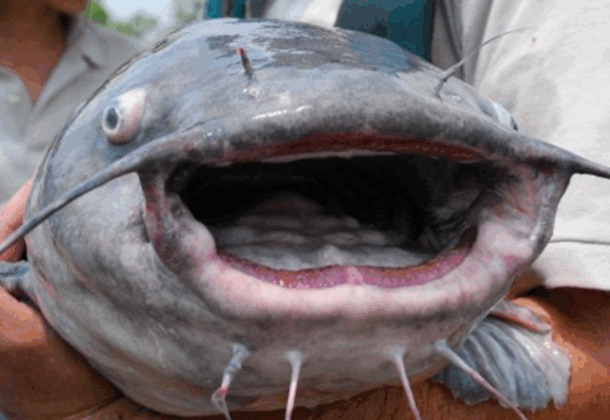
Congressman Steny H. Hoyer (D-MD) has joined other legislators to introduce a bipartisan bill that would facilitate using the invasive blue catfish in pet food. The Mitigation Action and Watermen Support, or MAWS, Act takes aim at the fish, one of the greatest predators threatening the ecology and economy of the Chesapeake Bay.
Reps. Sarah Elfreth (D-MD), Rob Wittman (R-VA), and Jen Kiggans (R-VA) also were bill sponsors.
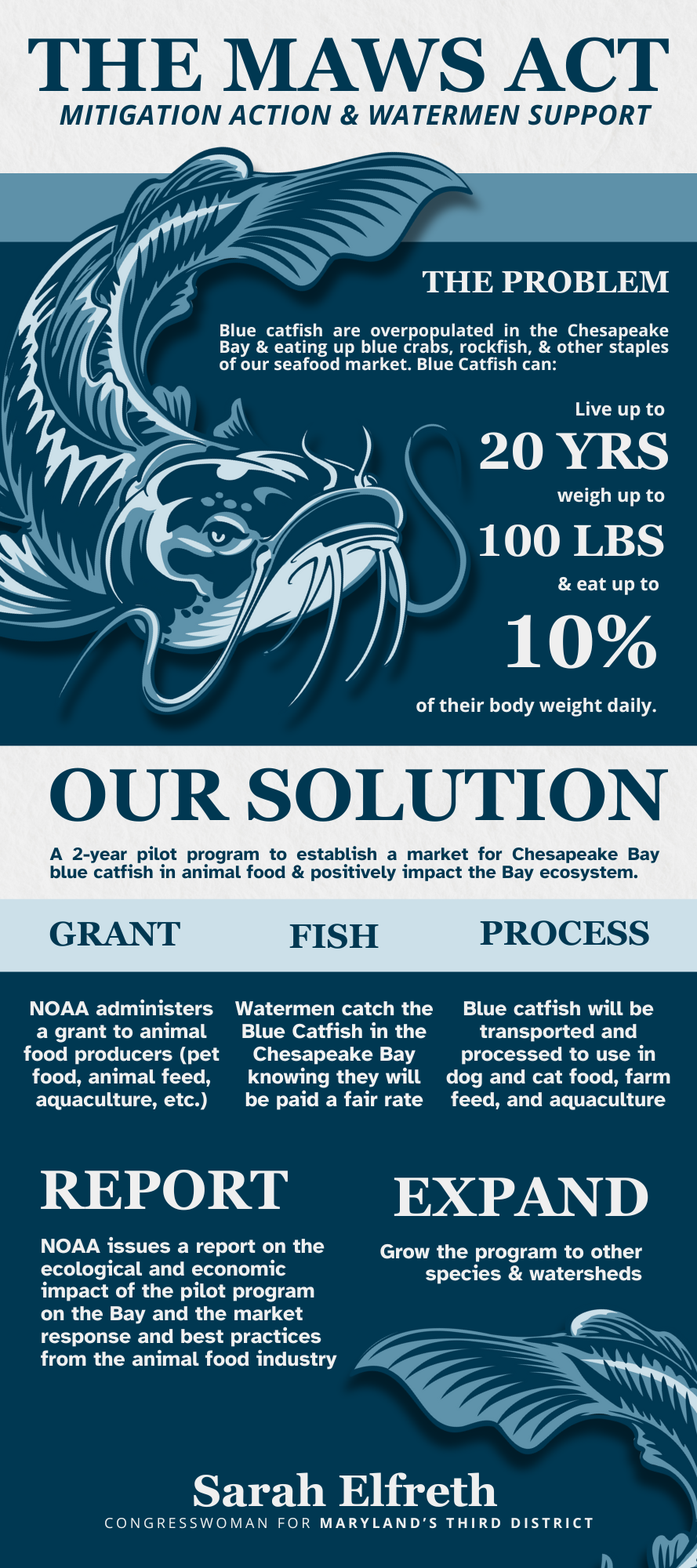
The MAWS Act will establish a pilot program within the NOAA Chesapeake Bay Office to facilitate a new market for Chesapeake Bay blue catfish in the pet and animal food industry in an effort to take millions of pounds of these harmful fish out of the waterways.
NOAA will administer grants to pet and animal food manufacturers to ensure watermen are properly incentivized to catch blue catfish in the Chesapeake Bay and establish transportation, processing, and manufacturing structures for a long-term market.
Throughout the two-year pilot, NOAA will collect data on the ecological and economic impacts of this program on the population of invasive blue catfish and other species in the Chesapeake Bay, the economic impact on watermen, and the market response and processes from pet and animal food manufacturers.
NOAA will additionally report back to Congress on best practices, lessons learned, and recommendations for additional species in other watersheds that may benefit from this program.
“The Chesapeake Bay is the beating heart of Maryland,” Congressman Hoyer said. “We have a responsibility to look after the Bay, its ecosystems, and the communities that it sustains. I’m proud to join my friend Sarah Elfreth – a longtime advocate for the Chesapeake Bay – on this vital legislation to protect the health of our public waters.”
“The Chesapeake Bay is the largest estuary in the United States, with more coastline across the watershed than the entire coast of California. It is a pillar of our local recreation, seafood, and tourism economies,” Rep. Elfreth said. “Invasive blue catfish pose a direct ecological and economic threat to our Bay, which is why I am introducing the bipartisan MAWS Act alongside Congressman Wittman to address the damage inflicted by blue catfish, while also strengthening our local seafood economy and providing a new source of protein to pets nationwide.”
“Having grown up on the Chesapeake Bay, I understand how important it is to protect our marine wildlife and restore the Bay’s ecosystem,” Rep. Wittman said. “Since their introduction, blue catfish have become an invasive species, posing a growing threat to the biodiversity of the region’s waters and inflicting economic damage to the seafood industries that rely on the Bay. I am proud to join Representative Elfreth in introducing the MAWS Act, which will create a new market to incentivize the harvest and sale of blue catfish while providing valuable data for future efforts to combat invasive species in our waterways.”
Invasive blue catfish do not have any natural predators in the Chesapeake Bay watershed. They can live up to 20 years and weigh up to 100 pounds. Their diet consists of staples of our seafood industry, including blue crabs, rockfish, striped bass, and oysters. Blue catfish are not only contributing to the ecological biodiversity challenge of the Bay but also causing significant economic damage to our seafood industry in Maryland and Virginia.
“The Chesapeake Bay is central to our way of life in Coastal Virginia. It supports thousands of jobs and feeds millions of people, but its future is under threat from invasive blue catfish. The MAWS Act is a creative, bipartisan solution that helps our watermen, protects native species, and turns an environmental challenge into an economic opportunity. By building a new market for blue catfish in pet food, we can strengthen the Bay’s ecology and the seafood economy that depends on it,” Rep. Kiggans said.
The Pet Food Institute, whose members make the vast majority of dog and cat food and treats in the US, has endorsed the bill.
Others supporting the legislation include the American Feed Industry Association, CITIZEN’S Pet Products (Plato Pet Treats and Furry Republic), American Sportfishing Association, Congressional Sportsmen’s Foundation, and the National Aquarium.
The full bill text is available here. A one-pager of the bill is available here.
Congressman Hoyer is chair of the Regional Leadership Council.
For more information about Rep. Steny H. Hoyer, visit his Leader member page.