Crabs Turning Scarce Across Chesapeake
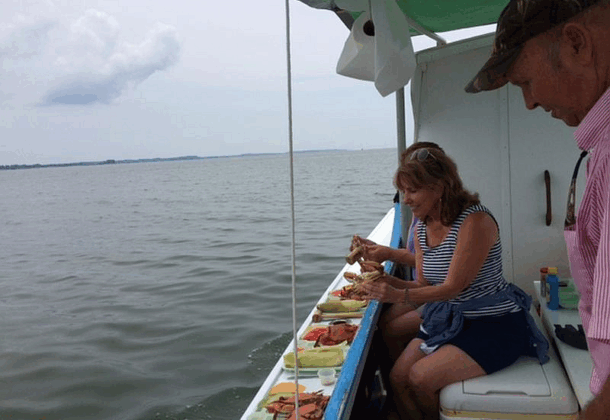
Message from the Cap’n is a compilation of fishing advice, waterman and weather insights, Chesapeake lore, and ordinary malarkey from the folks who keep their feet wet in the Potomac and St. Mary’s rivers.
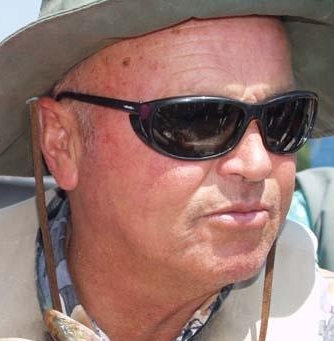
The Cap’n
Interpretive Buoy System: The lower Potomac water temperature rolled over 85 degrees F by mid-July, a near 4-degree increase from the start of July. The salinity largely holding at 11.5 PSU (practical salinity unit).
We started out fortunate here in the Lower Potomac and St. Mary’s rivers, in that crabbing was rather good the opening week of July. Good males were bringing around $180 and sooks (females) about $75 per bushel off the boat. Peelers have been scarce resulting in large soft crabs bringing $5 a piece.
Some places in the bay didn’t have it that good. Directly opposite St. George Island is Smith Island where most crab scrapers had shut off their shedding boxes by the 4th of July for the lack of peelers (crabs that will soon molt and become soft crabs). Many crab potters have their traps on the shore, waiting for crabs to arrive.
“It’s as bad as I have ever seen it here,” I quote one crabber from Smith Island.
Studies have suggested that we would have a subpar year as crab population numbers are below historic averages. There are many species in the Chesapeake Bay that eat the blue crab. This just increases pressure on the species. As protests grow in Virginia against the huge menhaden catches by commercial trawlers at the mouth of Chesapeake Bay, charter boat captains are warning that rockfish and other trophy Chesapeake species will turn to eating crabs. Already the drastic drop in menhaden has been blamed for a second year of osprey nest failures in the lower Chesapeake.
So, get your crabs early, before the other species gobble them up!
“Don’t procrastinate as you might be too late”
Or if you wish to turn your attention to soft crabs and wish to shed a soft crab or two, let me explain thusly :
*********Shedding a Crab*********
- Male has the rocket ship
- Sook has the capital dome
- Male has blue on the claws
- Sooks has red on finger tips
- They both have four legs
- To crawl about with
- two swimming paddles
- To swim along with
- They all eat plenty and grow like hell
- But are confined within a hard shell
- And then when they’re really fat inside
- They split their shell in which they reside
- The rules for shedding a crab are this:
- Red sign like a fishhook on the swimming fin
- Tells that crab shedding process will soon begin
- Pink sign like a fishhook on the swimming fin
- Tells one that it’ll shed after a week of delays
- When shedding they wiggle out as a pap-soft crab
- Then they need be cleaned to remove the bad
- Using scissors for this job is a great plan,
- Then, by golly, they’re ready for the frying pan
- They only stay soft for about four hours
- Before turning into a paper shell with power
- By taking some limestone out of the water
- To straighten the wrinkles around its border
- After some days the crab will shed again
- Doing so many times before life’s end
- Blue crabs only live like three years
- If lucky not to be eaten by its peers.
Till next time, remember “It’s Our Bay, Let’s Pass It On.”
To learn about tours and trips into the Chesapeake, keep in touch with Fins + Claws on Facebook. Catch up on Messages from the Cap’n Member Page. Please visit Cap’n Jack’s lore and share with your social media sites. Or reach him here: [email protected] or 240-434-1385.