Message from the Cap’n — The Great Clam Rush
Message from the Cap’n is a compilation of fishing advice, waterman and weather insights, Chesapeake lore, and ordinary malarkey from the folks who keep their feet wet in the Potomac and St. Mary’s rivers.

The Cap’n
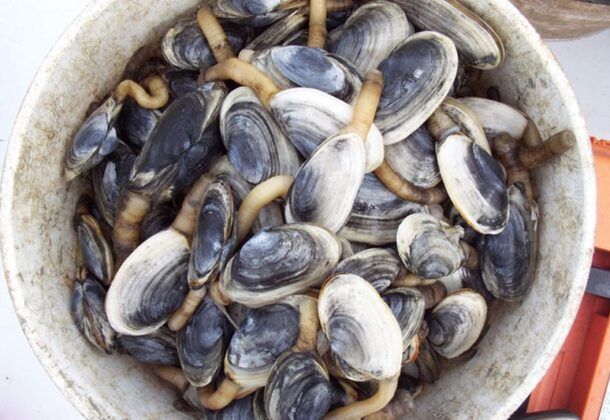
When the Seafarers International Union bought the old Piney Point Navy base in 1968 and finished dredging the pond behind our house, nobody expected the Potomac to explode into a full‑blown clam boom. But around 1970, clammers from the Eastern Shore began pouring in with catamarans, workboats, and every type of homemade rig. All chasing the soft‑shell bonanza off Piney Point and Wicomico.
The bottom was perfect—clean, sandy, and loaded with white‑shelled clams two and a half inches long. A man could catch a hundred bushels by nine in the morning. Conveyor belts ran nonstop, dustpans flying and clams flying into baskets off the end of a conveyor belt. For a few years, the river felt like a frontier town. Bars were packed, restaurants full, and Eastern Shore boys were courting St. Mary’s County girls—some leaving more than memories behind.
Shell Russell even bought a big barge with a roof and a centerboard well, ugly as sin but perfect for picking clams standing straight up. Catamarans loaded tractor‑trailers daily. Up in the Wicomico and Breton Bay, Bill Dixon and Sam Bailey were buying and shucking as fast as boats could bring them in. Local watermen joined the rush, and I finally rigged up a little 40‑foot box‑stern to get in on the tail end of it.
Then came Tropical Storm Agnes in 1972. The freshwater she dumped down the tributaries of the Potomac and Chesapeake Bay killed clams and oysters stone dead within several weeks. Overnight, the boom was gone.
When clams grew scarce, a few of us crossed to the Virginia side below Raggedy Point. We found some—but they were on Ernie Harden’s leased oyster bottom. The Virginia Marine Police hauled us into Montross jail, a cold, damp little brick box that smelled like wet concrete and a horse barn. After half a day and a $400 fine, they let us go. No clams, no money, just a story we’d never forget.
And that was the end of the Great Gold Clam Rush.
Looking back, clams never actually reached the value of gold back then. We used to deliver clams to Kent Island for $2.50 a bushel in our own truck at that time. They’re closer to gold pricing today, worth over $200 per bushel when they can be found. Local merchants are selling them for about a dollar a piece.
Till next time, remember “It’s Our Bay, Let’s Pass It On.”
To learn about tours and trips into the Chesapeake, keep in touch with Fins + Claws on Facebook. Catch up on Messages from the Cap’n Member Page. Please visit Cap’n Jack’s lore and share with your social media sites. Or reach him here: [email protected] or 240-434-1385.