Message from the Cap’n – The Greatest Haul
Message from the Cap’n is a compilation of fishing advice, waterman and weather insights, Chesapeake lore, and ordinary malarkey from the folks who keep their feet wet in the Potomac and St. Mary’s rivers.
The Cap’n
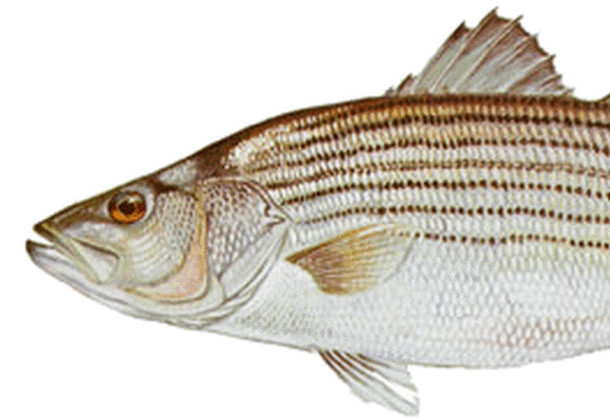
Coming out of St. Mary’s they passed Fort Point, eased down into the hollow, laid the net out, and struck the motherlode. When the net came tight, it held 1,155 boxes of rockfish, each fish weighing between three and eight pounds. The total weight came to fifty‑four tons. Never before had anyone heard of that many rockfish being caught at one time in the river.
I always picture Tynan about thirty‑five years old, slender as a rail, blonde hair, and maybe 140 pounds soaking wet. He was a refined man, especially when it came to mending nets. We used to help him tar nets just below the lot where Captain Edgar Pearson kept his turtle pens. Tynan was a young captain, but a good one, and he had a big round stern boat called the Irene H.
One of his four crew was Bunny Deagle from the St. George Island clan. Bunny was the donkey‑man—the one who winched the long net ashore. The donkey boat was about 30 feet long, high sided, and painted gray. She had a gasoline‑powered winch on the stern, and Bunny was the one who hauled the net in once the circle was made.
Another crew member was Alan Gibson, always close at hand, always cheerful, and strong as a mule. My brother, Sonny Russell, was also aboard that day. Sonny was a year older than me, that was the only day he ever worked on a haul‑seine rig. He made enough money from that one catch to buy himself a brand‑new 1960 Ford convertible—red with a black top. After that, he told Tynan Poe he was done with the seine boat and was going to work on a tug. He left with Captain Ferd Crowder and spent six or seven years with Stewart Transportation Company. Smart move!
Every one of those rockfish was sold to Charles Davis in Ridge. Charlie had a big ice plant, so he could ice the fish properly and ship them north. Tynan and the boys got 12 cents a pound for the first 200 boxes. After that, the price dropped little by little until they were getting seven cents a pound—seven dollars a box—for the last 700 boxes.
There was a simple reason for that. They caught too many fish at once and had no way to spread them out among different buyers. They couldn’t run them across the Potomac and sell a few here and a few there to keep the price up. Instead, they had to sell the whole load to one buyer at the fish market in Baltimore. Once word got out that they had that many fish, the market flooded, and the buyer took full advantage.
Till next time, remember “It’s Our Bay, Let’s Pass It On.”
To learn about tours and trips into the Chesapeake, keep in touch with Fins + Claws on Facebook. Catch up on Messages from the Cap’n Member Page. Please visit Cap’n Jack’s lore and share with your social media sites. Or reach him here: [email protected] or 240-434-1385.